Through 196 short but concise lyrics, the author of the Patanjali develops the philosophy of yoga and explains the process for exploring our inner world, our path to fulfillment and bliss. The Yoga Sutras is a practical guide to our spiritual journey, designed to remind us of who we truly are. Travelling through time from the 4th century BC and still with us today, with their teachings, the Yoga Sutras are perhaps more relevant than ever. Although considered fundamental texts for the study of the yoga system, they do not include a single asana description. The Yoga Sutras do, however, explain how, experientially, each person, through their own personal path in this system of yoga, comes to know themselves.
According to the Yoga Sutras, yoga is the cessation of the fluctuations of the mind. As the mind quiets down, truth emerges to the surface. Through the practice of yoga, we get in touch with our inner observer and are led to a higher level of consciousness. And Patanjali presents the eight steps to follow on this path. The eightfold path to our contact with the true nature of existence. And this path, which is made up of eight legs - the Yamas, Niyamas, Asana, Pranayama, Pratyahara, Dharana, Dhyana and Samadhi - comes to clarify that yoga is more than just stretching on the mat, and that its true value comes when it is applied to everyday life. The first five strands are externally focused, and could be said to be considered prerequisites to building the foundation of a spiritual, luminous life, while the remaining four are internally focused.
The first strand, the Yamas, relates to how we interact with others and with ourselves, and consists of five principles. Ahimsa or non-violence, Satya or filiality, Asteya or non-stealing, Brahmacharya or continence and Aparigraha or non-greed.
And Patanjali promises us that if one becomes established in Ahimsa, then he will cease to be the recipient of any aggressive behaviour from his environment. If he conquers Satya, he will see his desires fulfilled. When one manages to establish himself in Asteya, then all the treasures of the world will be presented before him, and with Brahmacharya, he will know the greatness of his power. And if he conquers Aparigraha, his past and future lives will be revealed to him.
In the second part, the Niyamas, which help us to go a little deeper, we find the principles of Saucha (purity, clarity), Santosha (pleasure), Tapas (self-discipline), Svadhyaya (inner study) and Ishvarapranidhana (dedication to something higher).
And as with the Yamas, so with the Niyamas, Patanjali explains where one can be led when one manages to establish oneself in each of them. Saucha comes to bring mastery of the senses, purification of the mind, joy and goodness. With Santosha, mental euphoria, contentment, unsurpassed happiness is achieved. With self-discipline, Tapas, any mental impurities are destroyed, followed by mastery over the physical body and the organs of action and the senses. If one establishes oneself in Svadhyaya, one will come into contact with the underlying reality. With Ishvarapranidhana, the state of perfected concentration is attained.
Both Yamas and Niyamas are practiced on three levels. In the body, in speech, and in the mind.
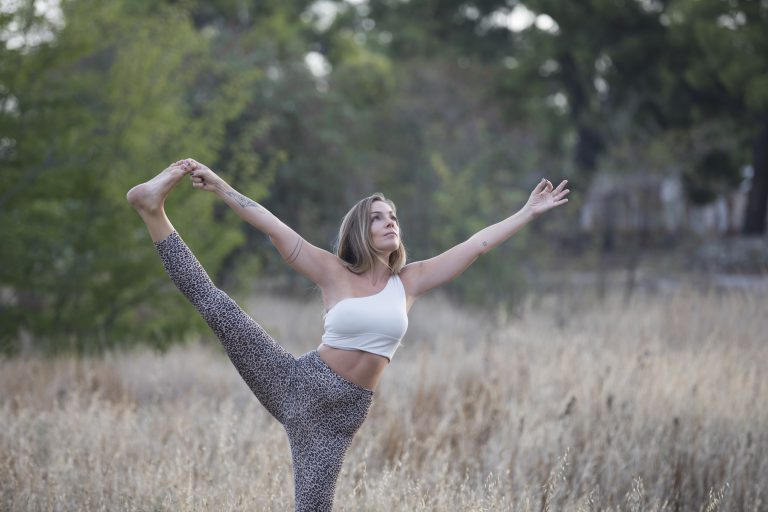
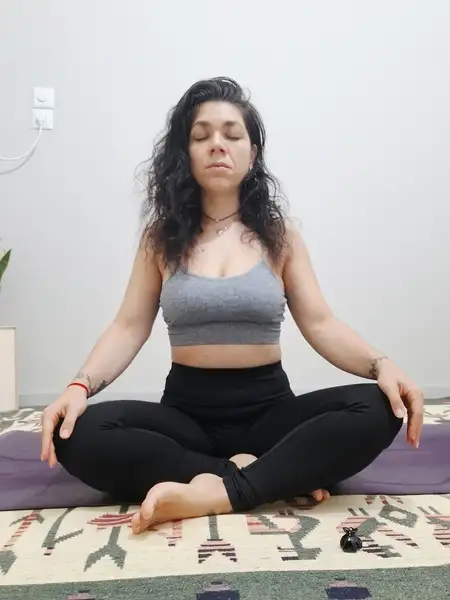
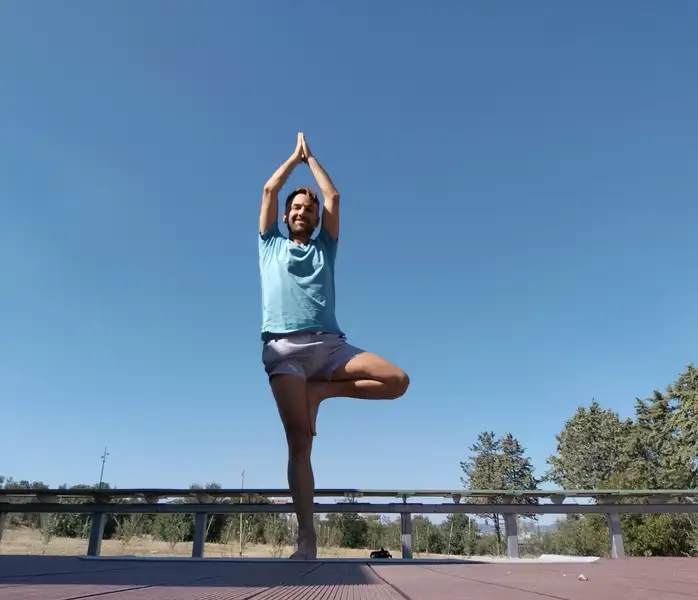
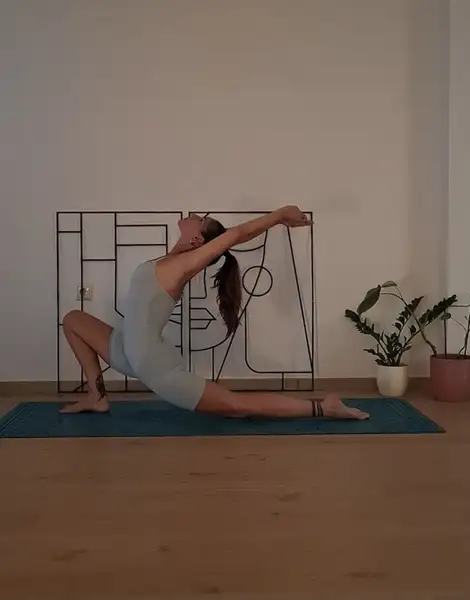
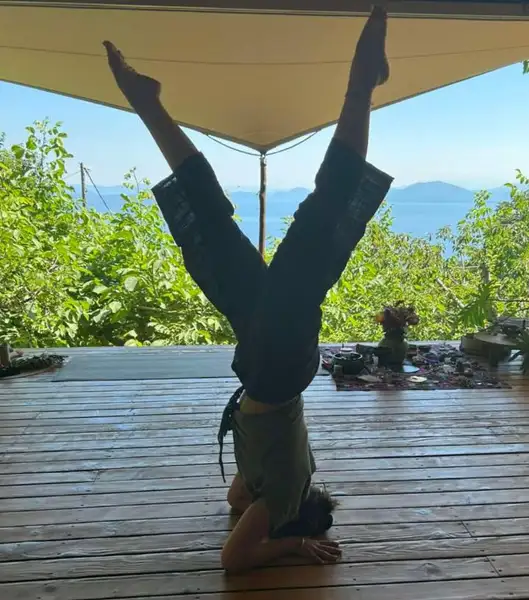
This is followed by Asana, the stable and comfortable postures that help the body prepare for meditation. The fourth leg is the Pranayama, the mastery of our life force through the control of our breath.
In the fifth leg of the yoga path, Pratyahara, the senses turn from the outer to the inner world.
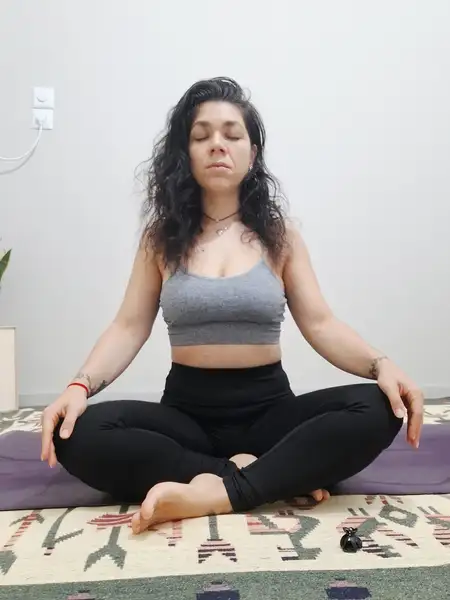
With the sixth limb, Dharana, we focus on the object of our meditation, pushing away any other thoughts, and are gradually led to the seventh limb, Dhyana, the state of meditation par excellence.
The eighth and final leg, Samadhi, comes when we have practiced all the previous legs and is considered the culmination of the journey. It can be defined as the transcendence of the lower self and union with the true Self. Union with the Divine. The union with the Universe.
We could say, then, that the traditional eightfold path of yoga, as taught by Patanjali, is a step-by-step methodology towards achieving this experience. And with this methodology, the practices of right thought and action, the application of basic ethical rules, postures of the body and breathing techniques are the means of preparing us for the final steps leading to the state of Samadhi. That ultimate union.
And the best part is that the eightfold path of yoga, according to Patanjali, appeals to all of us, regardless of our previous experience, our path or our beliefs. It is essentially a tool from which we can all benefit.
Of course, putting it into practice on a daily basis, both on and off our mattress, can be difficult. Incorporating it into every aspect of our lives - in our roles as friends, partners, workers, citizens or parents - can take a lot of effort and a great deal of dedication. But we can certainly walk this path, moving forward step by step. Yama to yama. Niyama to niyama. The very thought that each time this happens, we will come a little closer to bliss, isn't that encouraging? The effort alone might bring us to a point a little better than before. After all, who wouldn't want a life without violence, pain, sadness? Who wouldn't want a clear mind? A life happy, with a sense of fulfillment, full of joy and love?
So isn't it worth trying?
Signed by Magda Hatizinakis.